One-Card Reading
One Card Tarot — Ask a Question and Draw Your Answer
One question, one card, one clear answer. The quickest tarot reading online.
A one-card reading is the simplest way to find clarity. It helps you see the situation you’re working through, name what truly matters, or receive gentle guidance on the question that occupies you right now.
Pause for a moment, take a deep breath, and ask yourself a simple question—for example: “How should I decide about…?”
- Pause and let your breath settle (a few seconds is enough).
- Name the question you want answered. Hold it in your mind while the cards shuffle, and notice how you feel.
- When the moment feels right, click a card below.
- Read the message and take from it whatever resonates with you.
One card is a surprisingly powerful tool, especially for a specific question. Instead of a sprawling spread, you receive a single clear message—a pointer for a decision, a view of a relationship situation, or of a dilemma at work. You draw one card, read its meaning, and relate it to what you’re working through. It suits self-reflection, decision-making, and quieting the mind—without needless complexity, any time and as often as you like.
Looking for a card for today? Try the daily tarot card—one card for the whole day, as a morning ritual.
How to Ask Your Question
Set your question
Direct, open questions about a specific situation work best, for example:
- “How should I decide about…?”
- “What should I know about this situation?”
- “What should I watch out for here?”
Prepare the cards
If you have your own deck, use it. If not, that’s fine—what counts is your intention and your focus.
Focus on your question
Don’t rush the shuffle. Notice the moment that feels like “now.” Intuition in tarot is quiet, but precise.
How to Read Your Answer
Pick your card
You can draw from the top of the deck, or choose “by eye”—the one that naturally pulls you in.
Read the upright meaning
Look at the card’s core meaning and energy. What’s the first thing that comes to you? Sometimes that alone is the whole message. And when you want to go deeper, the meanings of all 78 cards are always at hand.
Connect it to your question
Notice whether the message is direct, or whether the card leads you to a different angle. Don’t take it as a fixed prophecy—more like a short conversation with your own inner self, one that can bring you calm and direction.
Frequently Asked Questions
Here are the answers to the questions that come up most often around tarot. They’ll help you feel more confident in a reading and use tarot as a practical guide.
Is this fortune-telling?
Not really. A one-card reading works as a short moment of insight and self-reflection: it shows the mood of a situation, a challenge, or what deserves your attention right now. Take it as a compass, never as a fixed verdict.
How do I phrase my question for the tarot?
Open questions work better than yes-or-no ones, and specific better than vague. Instead of “Will it be good?” try “What should I know about…?”—and instead of “Should I do it?” try “How should I decide about…?” An open question gives the card room to show you the connections, not just a single word.
What questions suit a one-card reading best?
Situations where you need one clear impulse: decisions (“Which direction should I take?”), relationship situations (“What should I know about this relationship?”), or dilemmas at work (“What should I focus on in this offer?”). For more complex themes, a spread of several cards serves better.
What if the card doesn’t seem to fit?
That’s all right. Read the meaning once more and look at it from another angle: What about it bothers me or contradicts me? Where might it show up more subtly—in my thinking, my mood, my communication? Sometimes you only understand a card’s message with a little distance, not right away.
Should I draw more cards when I don’t understand the message?
With one question, it’s better to stay with one card. If you’d like a follow-up, draw a single clarifying card instead and ask precisely: “What matters most in this message?” Too many cards at once can needlessly muddle things.
Can I draw again if I don’t like the result?
You can—the one-card reading is unlimited, and for every new question feel free to draw a new card. With the same question, though, repeated draws lower the value of the reading. It’s better to keep the first card as your main answer and perhaps ask a follow-up question: “How can I work with this as well as possible?”
Why is the deck called Rider–Waite?
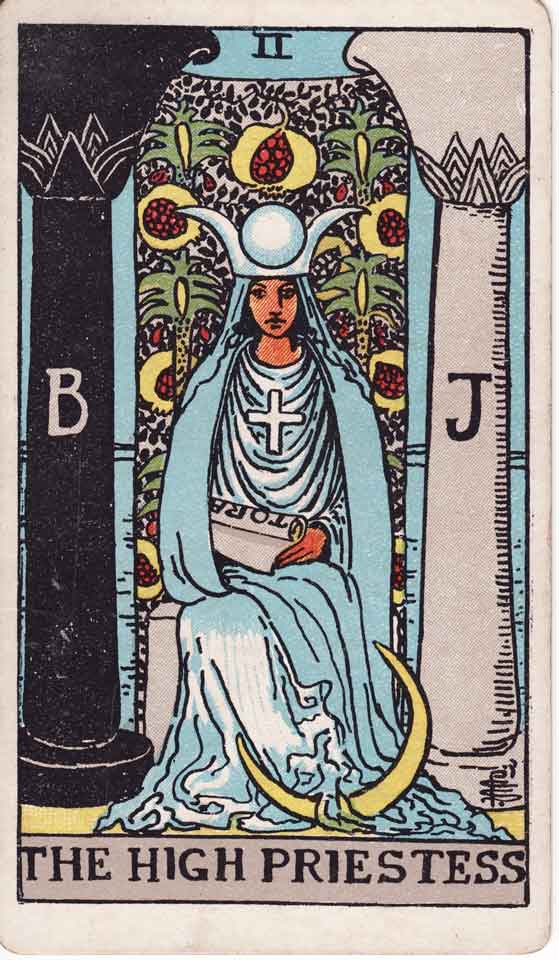
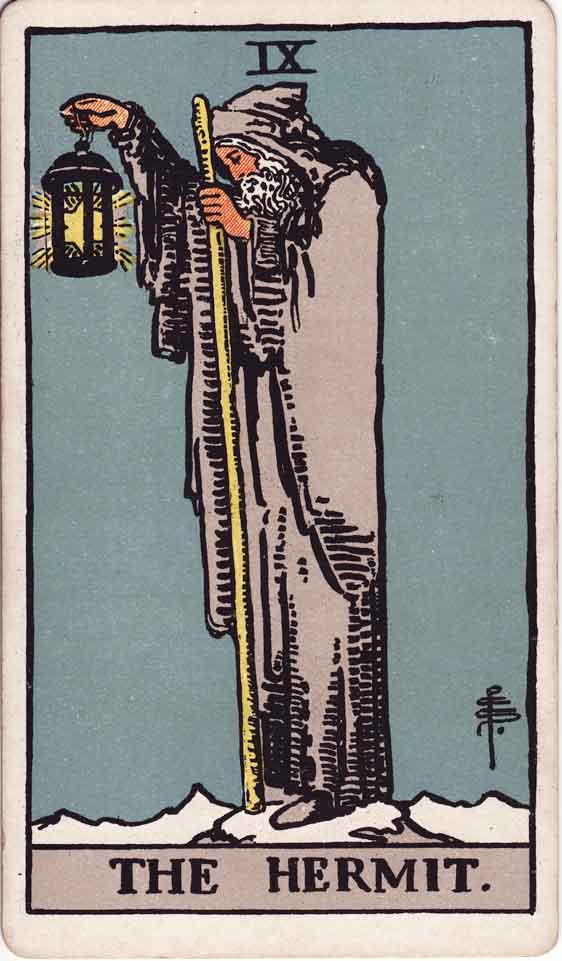
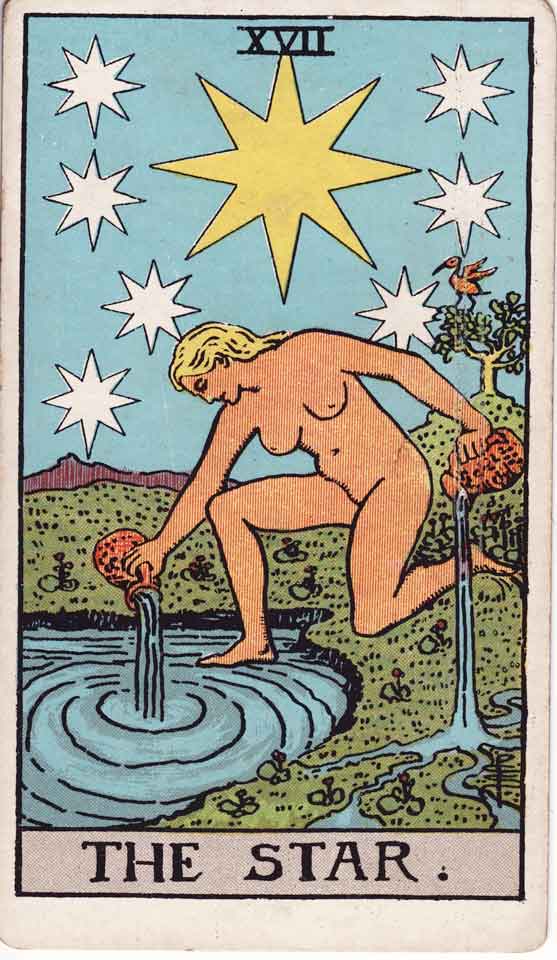
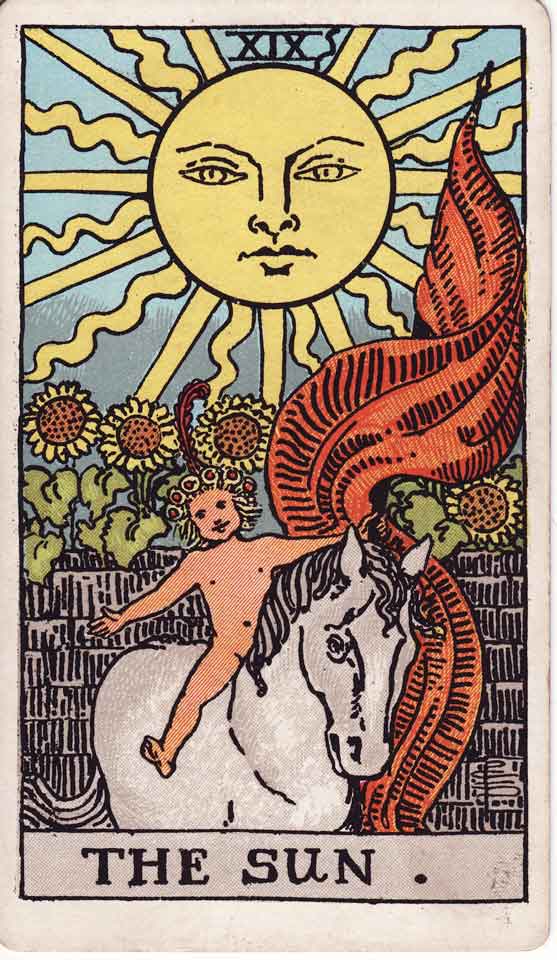
The name comes from the publisher William Rider & Son and from A. E. Waite, who devised its concept and symbolism. The illustrations were painted by Pamela Colman Smith, which is why the name Rider–Waite–Smith is often used as well. It is one of the most widely used decks, especially for learning and for reading the symbols.
What is the difference between a one-card reading and the daily card?
A one-card reading answers a specific question you ask, and you can use it any time and as often as you like. The daily card works with the energy of the whole day instead—once drawn, it stays with you until midnight. If you have a question, stay right here; if you’d like to set the tone for today, try the daily card.
I hope this helped you find your footing with the tarot. If another question is on your mind, feel free to write to me—I’m happy to add more answers.