Five of Swords — Tarot Card Meaning
The Five of Swords is a card of quarrel and hollow victory, and every time I turn it over, I offer the same reminder—sometimes even a won argument tastes like a loss. At its core, the Five of Swords means conflict, tension, and a victory that rings hollow because it came at the cost of relationships or honor. It belongs to the Swords and the element of Air, so this is a battle of words, opinions, and ego. After all my years with the cards, I know it arrives when “being right” is costing us too much, or when a dispute is simmering around us, the kind no one truly walks away from as the winner.
Together we’ll look at what the Five of Swords means upright and reversed, what it brings to love, career, and money, how to read it as a daily card, and what message hides in its image.
Upright Meaning
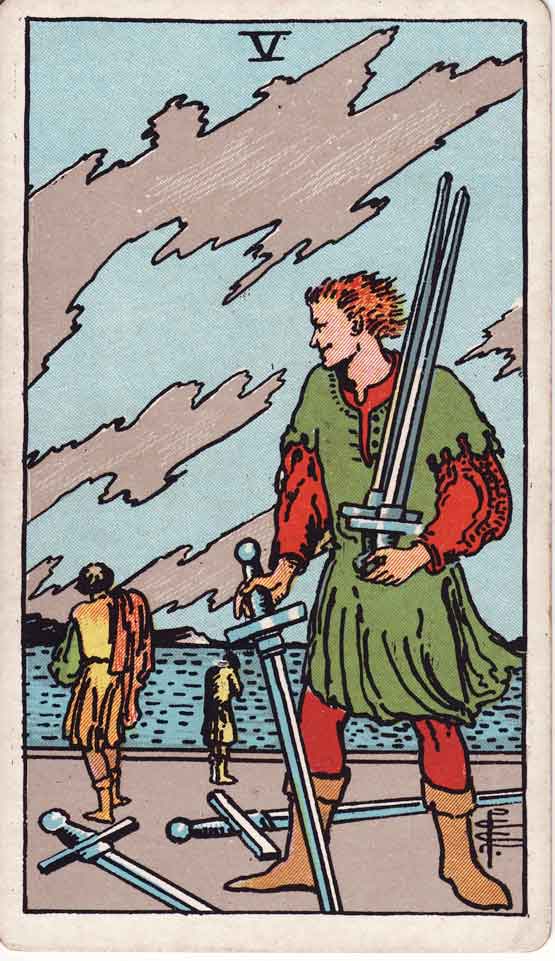
Upright, the Five of Swords is a card of quarrel and empty victory. A smug-faced figure gathers up the swords while two others walk away dejected—the image of a win that left behind only wounded people and solitude. When I see it in a spread, I say that conflict is simmering around you, or that it’s time to weigh whether the “win” is really worth it. The Five of Swords carries an energy of tension, ego, and the bitter price of victory.
This card reminds you that not every dispute is worth winning, and that victory at any cost can sometimes bring more loss than gain. The Five of Swords invites you to look honestly at whether the argument is worth it, whether you’re hurting others or yourself, and whether it might be wiser to step back. It often speaks of conflict, rivalry, sharp words, or a victory that tastes empty. In a reading, it lends the whole situation tension and an invitation to think twice. This is a season of dispute, one that calls on us to choose our battles wisely and not lose, in the winning, what truly matters.
What Does the Five of Swords Reversed Mean?
The Five of Swords reversed tells of a conflict that is either being settled or slowly dying down. Most often it speaks of reconciliation, forgiveness, and the end of a dispute—or else of lingering tension, resentment, and the difficulty of letting an argument go. When I see this card reversed, I gently remind you that reconciliation is almost always worth more than victory.
Sometimes the Five of Swords reversed suggests the dispute is ending, reconciliation is coming, or there’s a willingness to forgive and move on. Other times it speaks of regret over how you acted, or of tension still smoldering beneath the surface. The card invites you to release the need to be right at any cost and to look for peace.
In love, the Five of Swords reversed can speak of making up after arguments—or, just the opposite, of tension and reproaches still dying down. At work, it suggests the end of a rivalry, or friction kept out of sight. As a yes-or-no answer, the Five of Swords reversed sounds ambiguous—it depends on whether the dispute truly gets settled. And if reversals raise questions of their own, every card page on this site settles the reversed meaning fairly beside the upright one.
The Five of Swords in Love and Relationships
In love, the Five of Swords is a card of conflict and tension. If you’re asking what someone feels for you, the Five of Swords suggests feelings overshadowed by arguments, rivalry, or wounding words—someone who may well feel affection, yet what rules between you right now is tension, or a contest over who’s right. These are feelings tangled up in a quarrel that keeps them in shadow. And if you’re wondering whether they think of you, the Five of Swords says yes—but disagreements, and perhaps hurtful words, are weighing on the relationship right now.
If you’re single, the Five of Swords can say that old wounds, or the need to be right, are making it harder for you to open up to love. For couples, it brings the serious theme of arguments, rivalry, and sharp words that wound—a reminder that a relationship is not about winning but about understanding each other. It’s a card of a love passing through conflict and calling for reconciliation.
I’ll say it plainly: the Five of Swords in love reminds you that “winning the argument” at the cost of hurting your partner is really a loss for both of you. If you’re asking whether someone will come back, the Five of Swords is cautious—the dispute needs settling first, and the reproaches need releasing. It reminds you that reconciliation and humility open doors that stubbornness closes. Choose your battles with love.
Career and Money
At work, the Five of Swords is a card of rivalry and conflict. It speaks of a competitive environment, of a fight over position, or of disagreements where someone wins at others’ expense. The card reminds you to weigh whether a win is worth it if it costs you good relationships or your reputation. It invites you to act honorably and not get drawn into exhausting battles of ego.
With money, the Five of Swords can suggest a dispute over money, a bad deal pushed through by force, or a loss tied to conflict. The card doesn’t predict a particular outcome, but it calls for fairness and for not gaining an advantage at other people’s expense. It’s a season when it pays to act with care and honesty.
The Five of Swords as a Daily Card
When you draw the Five of Swords as your daily card, take it as an invitation to choose your battles wisely today. A dispute or a tense situation may be waiting for you—try weighing whether the argument is worth it, or whether it’s wiser to step back and keep the peace. Notice where your ego pulls you toward being right at any cost. Today it pays to act fairly and to wound neither others nor yourself. Remind yourself that peace tends to be worth more than victory. And if you’d like a hint each morning about which battles matter, you can draw your card of the day right here.
Symbolism of the Card
The Five of Swords shows a figure in the foreground holding three swords with a smug, almost triumphant look, while two more swords lie on the ground. That satisfied victor’s expression is the very heart of the card—but in contrast to it we see two other figures walking away, dejected, heads bowed. The contrast says it all: someone has won, yet left behind only wounded people and solitude.
The swords on the ground are the weapons of the defeated, who have given up the fight. The sky is full of large, jagged clouds that suggest a storm, tension, and inner unrest—their sharp edges echo the sharpness of the conflict. In the background lies a stretch of water, which gives the scene an emotional dimension and recalls the toll a quarrel takes on the heart. The whole card is the image of a victory that tastes empty, and an invitation to consider what winning really costs us. Tarot’s imagery wins you over without a fight—and every card on this site hands you another of its swords.
Card Combinations
The Five of Swords changes its shade with the cards around it. When it lands beside the Six of Swords, they speak together of the time after a conflict when you leave the tension behind and head for calmer waters.
The Five of Swords and Justice together remind you that a win should be earned honestly and in balance, not at others’ expense. And when the Five of Swords meets The Tower, they can speak together of a sharp conflict leading to a sudden break—an invitation to set things on a footing of truth.
Does the Five of Swords Mean Yes or No?
No—or “yes, but at a high price.” The Five of Swords is a card of quarrel and hollow victory, and upright it answers on the negative side, because even a potential win comes at the cost of relationships, peace, or honor. It says the situation is marked by conflict, and you should weigh whether it’s worth it. Reversed, the answer moves toward reconciliation when it speaks of a dispute being settled. Either way, it’s better to look for peace than for victory at any cost.
Choose your battles with love today. The Five of Swords reminds you that peace and understanding are almost always worth more than “being right”—and that stepping back at the right moment is not defeat but wisdom. Protect what truly matters.
Frequently Asked Questions
What does the Five of Swords mean?
The Five of Swords means conflict, tension, and a victory that rings hollow because it came at the cost of relationships or honor. It belongs to the element of Air, so this is a battle of words, opinions, and ego. It reminds you that not every dispute is worth winning, and it invites you to choose your battles wisely.
What does the Five of Swords mean in love?
In love, the Five of Swords suggests feelings overshadowed by arguments, rivalry, or wounding words. For couples, it brings the theme of conflict and sharp words, and it reminds you that a relationship is not about winning but about understanding each other. Winning an argument at the cost of hurting your partner is really a loss for both of you.
Does the Five of Swords mean yes or no?
The Five of Swords answers no—or “yes, but at a high price.” Upright, the situation is marked by conflict, and even a win comes at the cost of relationships or peace. Reversed, the answer moves toward reconciliation if the dispute gets settled. Better to seek peace than victory at any cost.