Temperance — Tarot Card Meaning
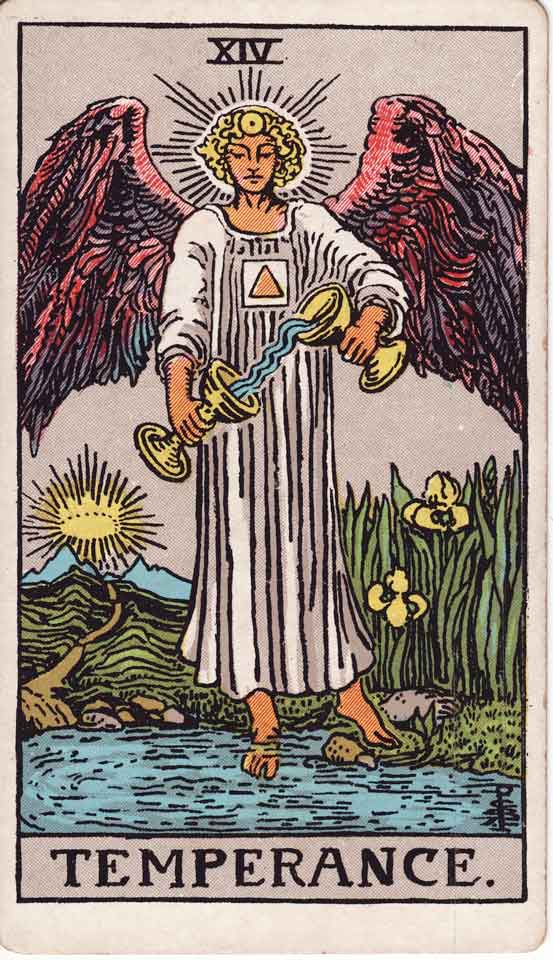
Temperance is a gentle, healing card, and whenever I turn it over, the calm of flowing water seems to pour into the reading. At its core, Temperance means balance, harmony, patience, and the art of blending opposites into one smooth, flowing whole. After all my years with the cards, I know it arrives when we need to find the middle path, replenish our calm, and trust that things will come into tune if we give them time.
Together we’ll look at what Temperance means upright and reversed, what it brings to love, career, and money, how to read it as a daily card, and what message hides in its image.
Upright Meaning
Upright, Temperance is a card of serene balance. An angel pours water from one cup into another in a perfect, unbroken arc—and that is the card’s message: the art of mixing opposites until harmony appears. When I see it in a spread, I say the time has come for patience, moderation, and inner peace. Temperance carries the energy of harmony, healing, and gentle flow.
This card reminds you that the most beautiful things in life ripen slowly, and that balance is born of patience, not of rushing. Temperance invites you to find the middle path, avoid the extremes, and give things the time they need to fall into tune naturally. It often speaks of healing—of body and of heart—and of calm returning after a stormier stretch. In a reading, it lends the whole situation moderation, accord, and the sense that everything is slowly coming back into balance. This is a season of patience, reconciliation, and trust in life’s flow.
What Does Temperance Reversed Mean?
Temperance reversed speaks of a balance that has been lost. Most often it points to extremes, impatience, discord, or the feeling that there is too much of one thing and not enough of another. When I see this card reversed, I gently remind you that the middle path can always be found again.
Sometimes Temperance reversed suggests overdoing something, or swinging from one extreme to the other. Other times it speaks of impatience, of trying to hurry what needs time, or of inner restlessness. The card invites you to slow down, find your measure again, and restore your calm.
In love, Temperance reversed warns of discord, impatience, or a relationship where giving and receiving have slipped out of balance. At work, it suggests overload, chaos, or lost inner peace. As a yes-or-no answer, Temperance reversed leans toward no—restore your balance first. If you enjoy going deeper into reversals, each card page on this site reads the reversed position beside the upright one.
Temperance in Love and Relationships
In love, Temperance is a card of accord and patient ripening. If you’re asking what someone feels for you, Temperance suggests feelings that are calm, steady, and sincere—someone who approaches you with understanding and wants to build a harmonious, balanced relationship. These are feelings that grow slowly and firmly, without dramatic swings. And if you’re wondering whether they think of you, Temperance says yes—with calm, and with warmth.
If you’re single, Temperance is a lovely sign—it suggests that once you find peace and balance within yourself, you naturally attract a relationship built on harmony. Sometimes it speaks of a love that arrives softly and step by step. For couples, it brings reconciliation, harmony, and the return of peace after a harder season—an invitation to find the middle path together.
I’ll add honestly that Temperance asks for patience in love, and for the willingness to meet each other halfway. If you’re asking whether someone will come back, Temperance is hopeful—it suggests the possibility of reconciliation and restored harmony, especially if you both approach each other calmly and without pressure. The card reminds us that a relationship blossoms where feelings blend like water poured between two cups.
Career and Money
At work, Temperance is a card of balance, cooperation, and patience. It says the best results will now come from a calm, even approach and the ability to bring different forces into accord. It’s a good time for teamwork, for finding compromises, and for projects that need time to mature. It favors professions tied to healing and mediation, and any work where calm and measure matter.
With money, Temperance counsels moderation and evenness. The card doesn’t promise particular sums, but it suggests that a sensible, temperate approach will bring stability. It’s a good season to find the balance between spending and saving, and to steer clear of extremes in either direction.
Temperance as a Daily Card
When you draw Temperance as your daily card, take it as an invitation to find a calm middle path today. It’s a day when measure and patience will gain you more than haste. Try not to overdo anything, give things their time, and stay inwardly steady even if something stirs around you. Notice where a little balance would do you good—in food, rest, emotions, or relationships. Today is a good day for making peace and for healing. Be patient and tender with yourself. And if a gentle daily rhythm suits you, you can draw your card of the day right here each morning.
Symbolism of the Card
Temperance shows an angel with great red wings, standing with one foot on solid ground and the other in the water. That stance is the heart of the card—it joins firmness and practicality with the world of feeling and intuition, matter with soul. Around the angel’s head glows a golden halo, sign of spiritual light and guidance, and on its chest sits the emblem of a triangle within a square, speaking of spirit and matter in accord.
In its hands the angel holds two golden cups, pouring water between them in a smooth, almost impossible arc—an image of the alchemical blending of opposites, the endless flow of energy, and emotional balance. Behind the angel, the sun rises between two peaks, a sign of hope and renewal, and a winding path leads toward the mountains, recalling the road to higher understanding. Yellow irises bloom at the water’s edge, signs of purity and clarity of spirit. The whole card breathes calm and accord. Tarot mixes its meanings through images like these—and every card on this site pours you another cupful.
Card Combinations
Temperance changes its shade with the cards around it. When it lands beside Death, together they carry a beautiful message—after transformation come peace, healing, and balance restored.
Temperance and The Lovers together speak of a relationship full of harmony and mutual attunement—a love that flows calmly and evenly. And when Temperance meets The Devil, it reminds you to find measure where extremes or temptation threaten—moderation as the counterweight to excess.
Does Temperance Mean Yes or No?
Yes—a calm, patient yes. Temperance is a harmonious card, and upright it answers in the affirmative, with the reminder that things need time and a balanced approach. It says: yes, only don’t rush anything, and keep to the middle path. It favors situations meant to ripen slowly. Reversed, the answer shifts toward no—it suggests extremes, impatience, or lost balance. Then restore your inner peace first.
Allow yourself calm and measure today. Temperance reminds you that balance is within your power—and that when you hurry nothing, things come into tune beautifully on their own. Be patient, and trust the gentle flow of life.
Frequently Asked Questions
What does Temperance mean?
Temperance means balance, harmony, patience, and the art of blending opposites into accord. It reminds you that the most beautiful things ripen slowly and that balance is born of moderation, not haste. It often speaks of healing and of calm returning after a stormier season.
What does Temperance mean in love?
In love, Temperance suggests calm, steady, and sincere feelings—someone who wants to build a harmonious relationship with understanding. If you’re single, it is a sign of love arriving gently and gradually; for couples, of reconciliation and restored peace. It asks for patience and a willingness to meet each other halfway.
Does Temperance mean yes or no?
Temperance answers yes, with a reminder to be patient—things need time and a balanced approach. Upright, it favors whatever is meant to ripen slowly. Reversed, it shifts toward no, because it points to extremes or a loss of balance that needs to be restored first.