The Hermit — Tarot Card Meaning
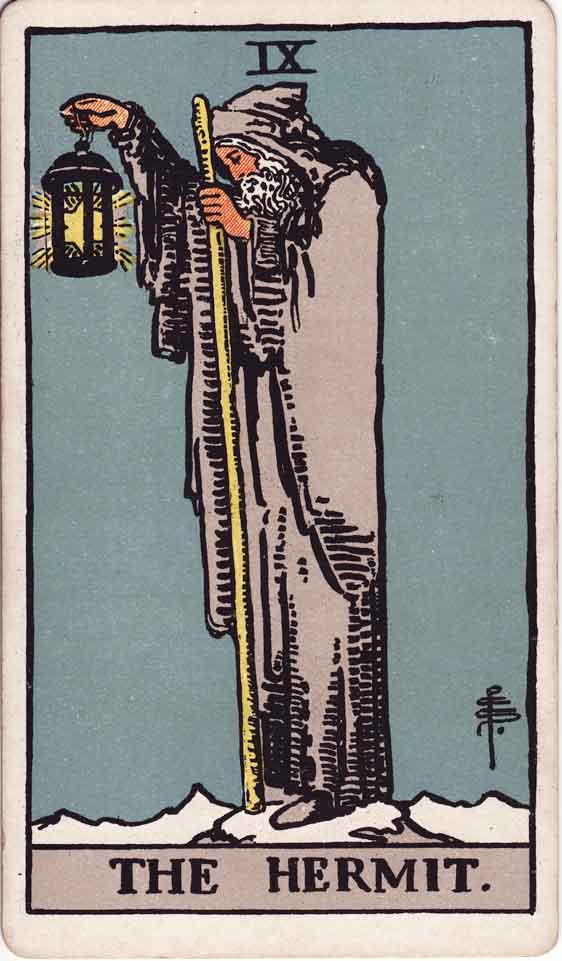
The Hermit is a quiet, deep card, and whenever I turn him over, the lights in the reading seem to dim until only one remains—the lantern in his hand. At its core, The Hermit means soul-searching, wisdom earned in solitude, and the light of understanding you find by growing still and turning inward. After all my years with the cards, I know he arrives when we need to step back from the noise of the world and listen to ourselves.
Together we’ll look at what The Hermit means upright and reversed, what he brings to love, career, and money, how to read him as a daily card, and what message hides in his image.
Upright Meaning
Upright, The Hermit is a card of wise retreat. An old man walks alone through a snowy landscape, a lantern in his hand lighting his way. When I see him in a spread, I say the time has come to slow down, withdraw for a while, and look for answers within rather than without. The Hermit carries the energy of introspection, silence, and deep wisdom.
This card reminds you that sometimes the wisest move is to step away from the crowd for a while, allow yourself solitude, and listen inward. The Hermit invites reflection, the search for meaning, and the trust that answers will come once we make room for them. He also carries the message that your own experience and inner knowing are precious—and that you can be a light for others, too. In a reading, he lends the whole situation depth and reminds you that a moment alone is not wasted time but a road to clarity. This is a season of thinking, maturing, and quietly seeking the truth.
What Does The Hermit Reversed Mean?
The Hermit reversed speaks of solitude and searching that have tilted off course. Most often it points to too much isolation and loneliness—or the opposite: an inability to slow down and listen to yourself. When I see this card reversed, I gently remind you that solitude is meant to heal, not to wound.
Sometimes The Hermit reversed suggests someone has closed themselves off from the world too much and is starting to feel lonely and cut off. Other times he speaks of the opposite—of losing yourself in rush and noise, avoiding the stillness you actually need. The card invites you to find a healthy balance between solitude and connection with people.
In love, The Hermit reversed warns of distance, withdrawal, or a sense of loneliness even within a couple. At work, he suggests isolation or an unwillingness to hear your inner voice. As a yes-or-no answer, The Hermit reversed sounds ambiguous, leaning toward no—you need more clarity. Curious about reversed cards in general? Each card page here walks through the reversed meaning right after the upright one.
The Hermit in Love and Relationships
In love, The Hermit is a gentle, thoughtful card. If you’re asking what someone feels for you, The Hermit suggests feelings that are sincere but rather withdrawn and reflective—someone who needs time and space to sort things out inside. The feelings are real, but quiet and careful, sometimes joined by a need for solitude. And if you’re wondering whether they think of you, The Hermit says yes—but they ponder it in silence, and may not have confided in anyone yet.
If you’re single, The Hermit can speak of a season when it’s good to be on your own for a while, to get to know yourself and get clear about what you truly want from love. Sometimes he suggests that the right relationship will come once you are at peace with yourself. For couples, he brings an invitation to deeper understanding—and to respecting each other’s space.
I’ll be honest with you: in love, The Hermit asks for patience. Not everything happens quickly, and sometimes quiet and distance are exactly what helps a relationship mature. If you’re asking whether someone will come back, The Hermit says the answer is ripening slowly and silently—they may need time alone before things become clear within them.
Career and Money
At work, The Hermit advises thoroughness, careful thought, and sometimes working alone. He says it’s a good time for deep thinking, study, planning, or searching for the deeper meaning of your own work. He favors professions tied to counseling, research, teaching, and the life of the spirit. He reminds you that a step back and a clear head will help you see things more plainly.
With money, The Hermit counsels prudence and deliberation. The card doesn’t promise a quick solution, but it suggests thinking each step through unhurriedly and consulting your own inner good sense. It’s a season for acting with care and refusing to be pushed into hasty decisions.
The Hermit as a Daily Card
When you draw The Hermit as your daily card, take it as an invitation to give yourself a moment of quiet today. It’s a day made for reflection, a walk on your own, writing in a journal, or simply listening inward. You don’t need people around you to feel full—sometimes the most precious conversation is the one you have with yourself. Notice what answers surface in the silence. Just take care that healthy retreat doesn’t turn into shutting people out—when you’re ready, return to the ones you love. And if a quiet daily ritual suits you, you can draw your card of the day here whenever you’re ready.
Symbolism of the Card
The Hermit is shown as an older man in a long gray cloak, walking alone and slightly bowed. The gray robe speaks of wisdom, age, and the passage of time; his posture, of contemplation and solitude. In one hand he holds a long staff that holds him up—and stands for the support of life experience and higher wisdom.
In the other hand he carries a lantern with a six-pointed star inside—the Seal of Solomon, a sign of knowledge and spiritual light. He holds the lantern before him, yet he shines it not out into the world but onto his own path, which speaks of the inner search—and of wisdom that offers itself only to those prepared to seek it. In the background rise snow-covered mountains and a cold, silent landscape, signs of seclusion, purity, and spiritual effort. This picture-language of tarot rewards a patient eye—each card on this site will show you more of it.
Card Combinations
The Hermit changes his shade with the cards around him. When he lands beside The High Priestess, they form a wonderful pair of inner knowing and intuition—both cards invite you to trust the silence and your own depths.
The Hermit and the Wheel of Fortune together say that a season of contemplation is preparing the ground for an important turning point and a new cycle. And when The Hermit meets The Fool, together they trace a beautiful circle—after a time of searching and wisdom often comes the courage to begin again.
Does The Hermit Mean Yes or No?
Maybe. The Hermit is a card of contemplation and inner searching, and to a direct yes-or-no question he answers with reserve. Upright, he says you are still finding the answer within, and that it’s wise to wait without haste and think things through—closer to “wait and listen inward.” Reversed, he leans toward no, because he suggests isolation or a lack of clarity. Then the first step is to sort things out inside yourself.
Give yourself a little silence today. The Hermit reminds you that the most precious answers are already within you—they only need to be heard in peace. Be patient with yourself, and trust your inner light.
Frequently Asked Questions
What does The Hermit mean?
The Hermit means soul-searching, wisdom gained in solitude, and the light of understanding you find when you grow quiet and turn inward. He invites you to slow down, allow yourself some seclusion, and look for answers within. He reminds you that a while spent alone leads to clarity and ripening.
What does The Hermit mean in love?
In love, The Hermit suggests sincere but withdrawn, thoughtful feelings—someone who needs time and space. If you’re single, he can speak of a season for getting to know yourself; for couples, of respecting each other’s space. He asks for patience, because answers ripen slowly and quietly.
Does The Hermit mean yes or no?
The Hermit answers with a maybe. Upright, he advises waiting and searching for the answer within, until things have time to mature. Reversed, he leans toward no, because he points to isolation or a lack of clarity—and that clarity has to come first.